Hidden city ticketing means buying a ticket to a city you do not intend to reach and getting off at the connection instead. The same thing is called throwaway ticketing, and in German Überkreuzbuchung. The pricing oddity behind it is real: Zurich to Bangkok via Dubai can cost less than Zurich to Dubai, because the two are sold into different competitive markets.
Whether you may do it is a question about your contract with the airline, and the answer moved in Germany in late 2025. We do not build on it, for reasons that are practical first and legal second.
Is it allowed? What the German federal court decided
Conditions of carriage generally require the legs of a ticket to be flown in the booked order, and reserve the airline's right to recalculate the fare when they are not. In case X ZR 110/24, decided on 28 October 2025, the Bundesgerichtshof held that a clause providing for recalculation of the fare when a passenger does not use all segments, or does not use them in the ticketed order, is invalid where it also catches passengers who intended to fly the whole itinerary when they booked and whose plans changed afterwards.
What fell is the blanket clause, the one that treated every unused segment alike. The judgment establishes no right to buy a ticket you never meant to complete: the line runs along intention, and a skip planned before booking sits on the far side of it. Lufthansa revised its conditions in February 2026. SWISS has a recalculation clause of its own, and Swiss law is a separate question from German law, so a German judgment does not decide a Swiss contract.
The state of play is messier than "it is banned" and messier than "the courts allowed it". This page is not legal advice and not a reading of your own contract.
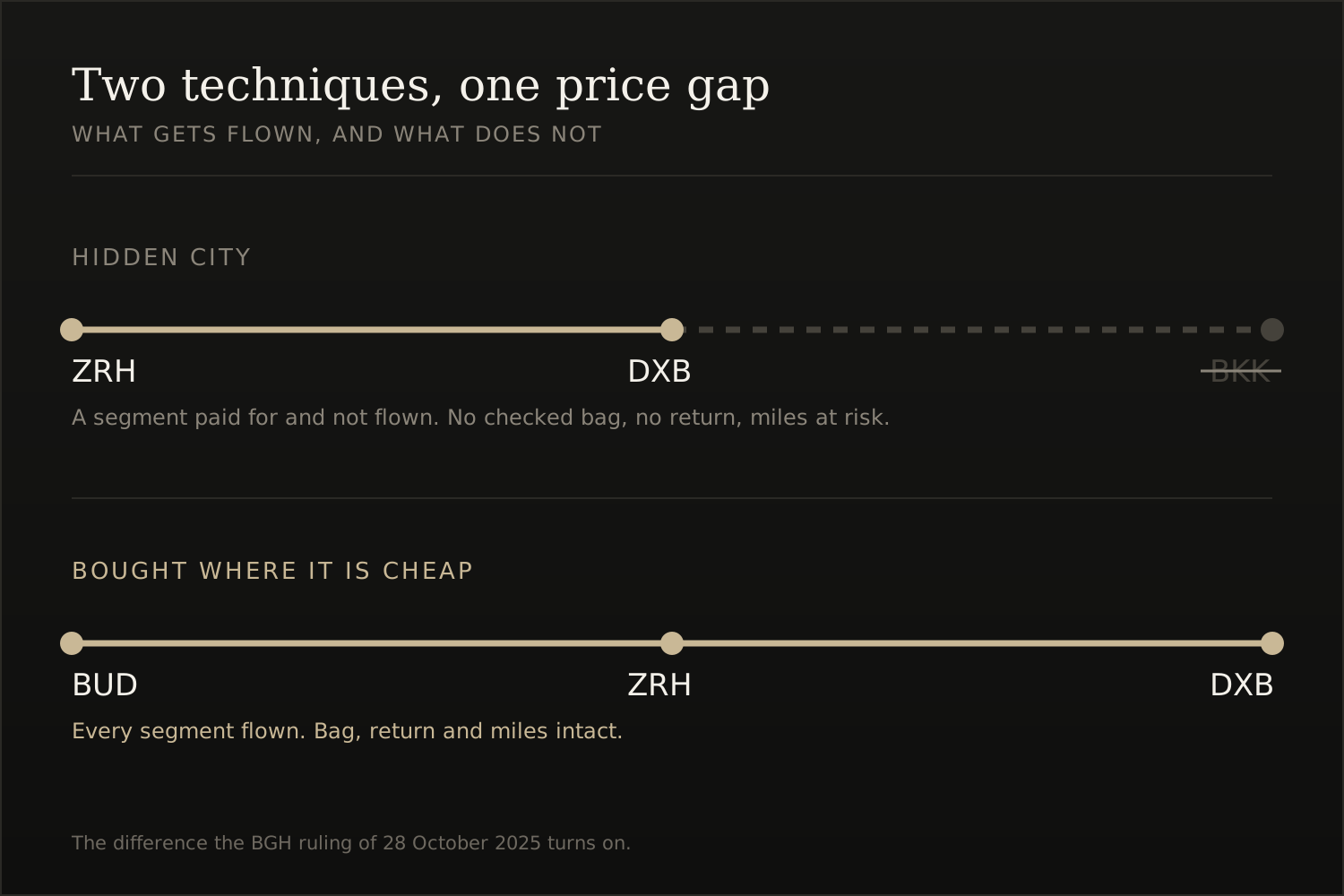
What a skipped leg costs you, whoever is right
- No checked bag. The bag is tagged to the ticket's final destination. You cannot collect it at the stopover.
- The return collapses, for now. Skip a segment on a return ticket and the remainder is typically cancelled, which leaves the technique usable one way only. The EU reform approved on 7 July 2026 bans denying boarding because an earlier flight went unused, so this cost expires a year after the text is published. It does not touch the recalculation question the BGH heard.
- Your frequent-flyer account is the record. Credited flights carry your name, and programmes have closed accounts and confiscated miles over patterns of skipped segments. Tied to one name, a habit is visible, and the status you are building is what you put at risk.
The opposite technique: buy where it is cheap, fly all of it
The same pricing oddity runs the other way, and used that way it costs none of the above: you buy the ticket in the country where it is cheap and fly every segment of it. We measured that across 728 live searches in September 2026. The median like-for-like saving was 655 francs in business and 1,271 in first.
| Hidden city | Bought where it is cheap | |
|---|---|---|
| Segments flown | not all of them | all of them |
| Checked bag | no | yes |
| Return ticket | usually forfeited | intact |
| The airline's recalculation clause | the thing being litigated | not engaged |
| Risk to miles and status | real | none |
| What you have to accept | none of the above | getting to the starting city |
What our version costs is logistics: a hop to the starting city, usually a night there, and the risks of two separate tickets. The pricing mechanism under both techniques is in business class cheaper abroad.
If you do it anyway
We are not in a position to advise you on it. The precautions repeated wherever it is discussed are one-way tickets only, hand luggage only, no frequent-flyer number on the booking, and no pattern. Expect to be asked for the difference, and expect no help from the German ruling for a skip you planned before you bought.