Nobody pays. If your first flight is late and you miss a long-haul flight you booked separately, no airline owes you a rebooking, a hotel or your money back. Two bookings instead of one saved a median 655 francs in business and 1,271 in first across the 624 cases we priced in September 2026, and the connection in the middle becomes yours.
What a self-transfer is
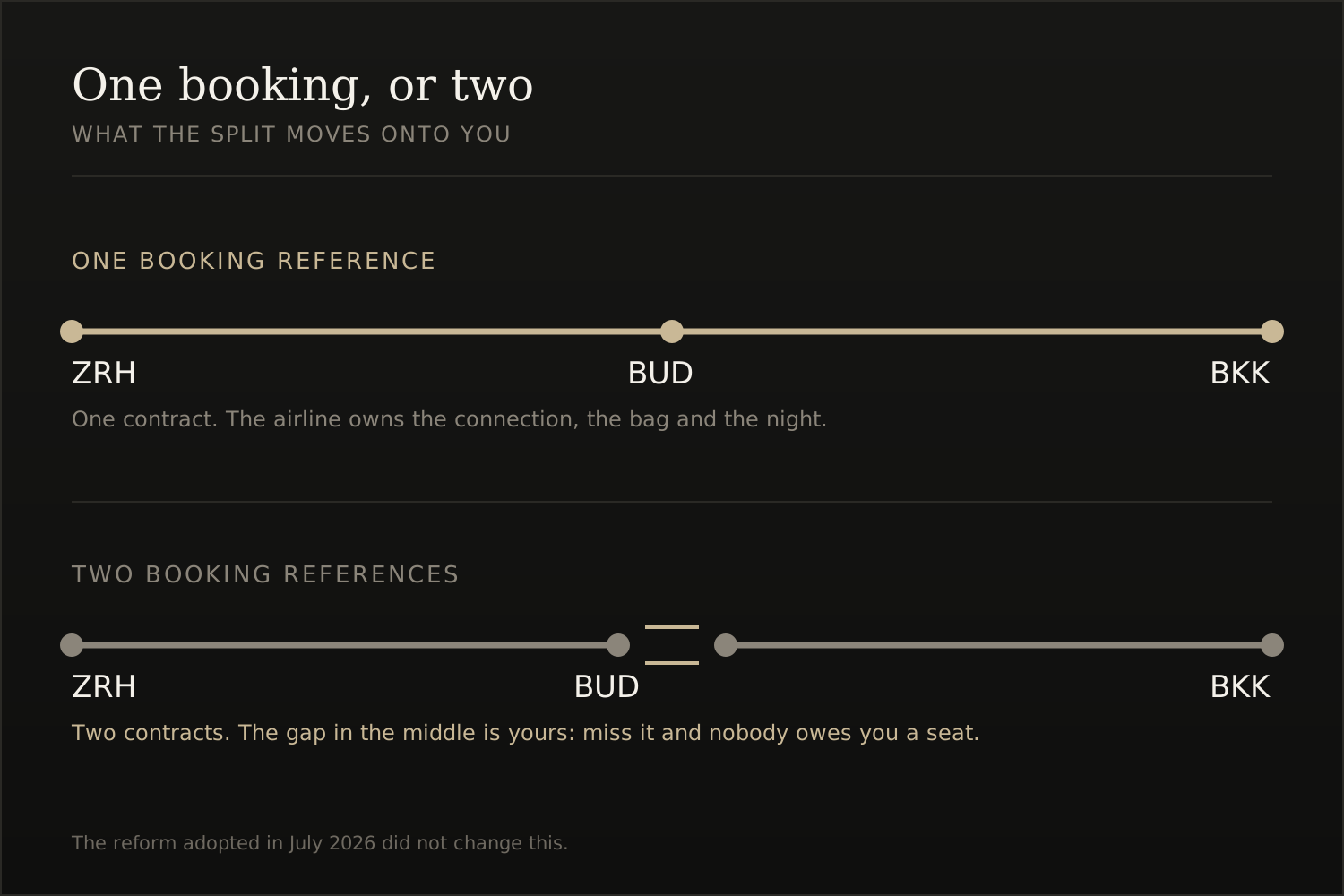
One booking means one booking reference, one contract, and one airline answering for the whole journey even where a partner flies part of it. A self-transfer is the other arrangement: you buy the short hop to the city where the long-haul ticket is cheap, you buy the long-haul separately, and you connect yourself. Two tickets, two contracts.
Two bookings are two contracts
Every protection in European air passenger law hangs on a contract of carriage, not on the journey as you experience it. On one booking, the Court of Justice held in Folkerts (C-11/11) that compensation is measured by how late you reach your final destination. First flight an hour late, connection missed, four hours late at the end: the whole journey is compensable.
On two bookings there is no final destination in that sense. The first flight was an hour late and owes you nothing on its own. The second owes you nothing because you were not there. The European reform adopted in July 2026 left the single-booking rule untouched.
What breaks on the day
- The rebooking is yours to buy. No hotel, no duty of care from either airline. If the long-haul fare was not changeable, that money is gone.
- The bag does not go through. Nobody has to through-check it, that is, tag it at home and send it to the far end. An interline agreement between the two airlines, the standing deal that lets them hand bags to each other, changes nothing here.
- You cannot check in for the second flight from home, and the long-haul desk may still be closed when you land.
- Immigration is real. Leaving the secure area to collect and re-check a bag can mean a passport queue, a second security queue, sometimes a visa.
Time is the insurance that works
An overnight in the staging city turns a missed connection from a lost ticket into a slightly worse evening. It is also the shape that saves the most, because the cheapest premium fares out of a neighbouring city frequently leave in the morning.
- Hand luggage where you can. No bag, no collection, no immigration round trip. On a short premium trip that is possible more often than people assume.
- Put the flexibility on the hop. A changeable economy hop costs very little more, a changeable long-haul business fare a great deal more.
- Read what your policy covers. Many travel insurers pay for a missed connection only on a single booking, and a policy that names self-transfer is a different product.
One booking is one contract. Two bookings are two contracts, and the gap between them is yours.
When one ticket is the right answer
- A tight same-day connection with a checked bag. You have bought a few hundred francs against the chance of losing a four-thousand-franc ticket. Same technique, completely different bet.
- When the single-ticket version costs about the same. If an airline sells your city to your destination via that same staging city as one booking, take it: one contract, one bag tag, one airline responsible.
Built with an overnight and hand luggage, this is a few hundred francs for an evening in another city. The luggage half has its own guide, and the pricing behind the saving is in business class cheaper abroad.